

Considering more space without replacing your boat? These answers cover the most common questions about Rosethorn trader, office, studio, workshop, storage, guest and leisure barges.
What is a Rosethorn floating space?
A Rosethorn floating space is a compact, purpose-designed butty barge created to provide additional room for work, trade, storage, guests, projects or leisure. It is designed around a defined use rather than presented as a standard off-the-shelf boat.
Is a floating space intended to replace my existing boat?
No. The central idea is more space without replacing the boat you already know and enjoy. The additional craft can provide a separate room alongside or near the existing boat, subject to the mooring, location and operating arrangements.
How large can a Rosethorn butty barge be?
Concepts may be developed up to approximately 25 ft. The final dimensions depend on the intended use, available berth, access, delivery route, technical requirements and the amount of equipment or furniture the space needs to contain.
What can a floating space be used for?
Potential uses include a trader shop, compact café service point, stockroom, office, creative studio, consultation room, workshop, cycle store, watersports equipment base, guest bedroom, utility room, family room, reading room, cinema room or private retreat.
Can one barge have more than one use?
Yes, where the uses are compatible. For example, an office may include sample storage, a studio may include a small display area, or a leisure room may provide occasional guest space. The design should still have one clear priority so the layout remains practical.
Can the new barge match my existing boat?
Yes. Exterior colours, materials, windows, doors and selected details can be developed to complement the host boat. The interior can also reflect the owner’s style, business identity or intended customer experience.
Can Rosethorn create a floating shop or trader barge?
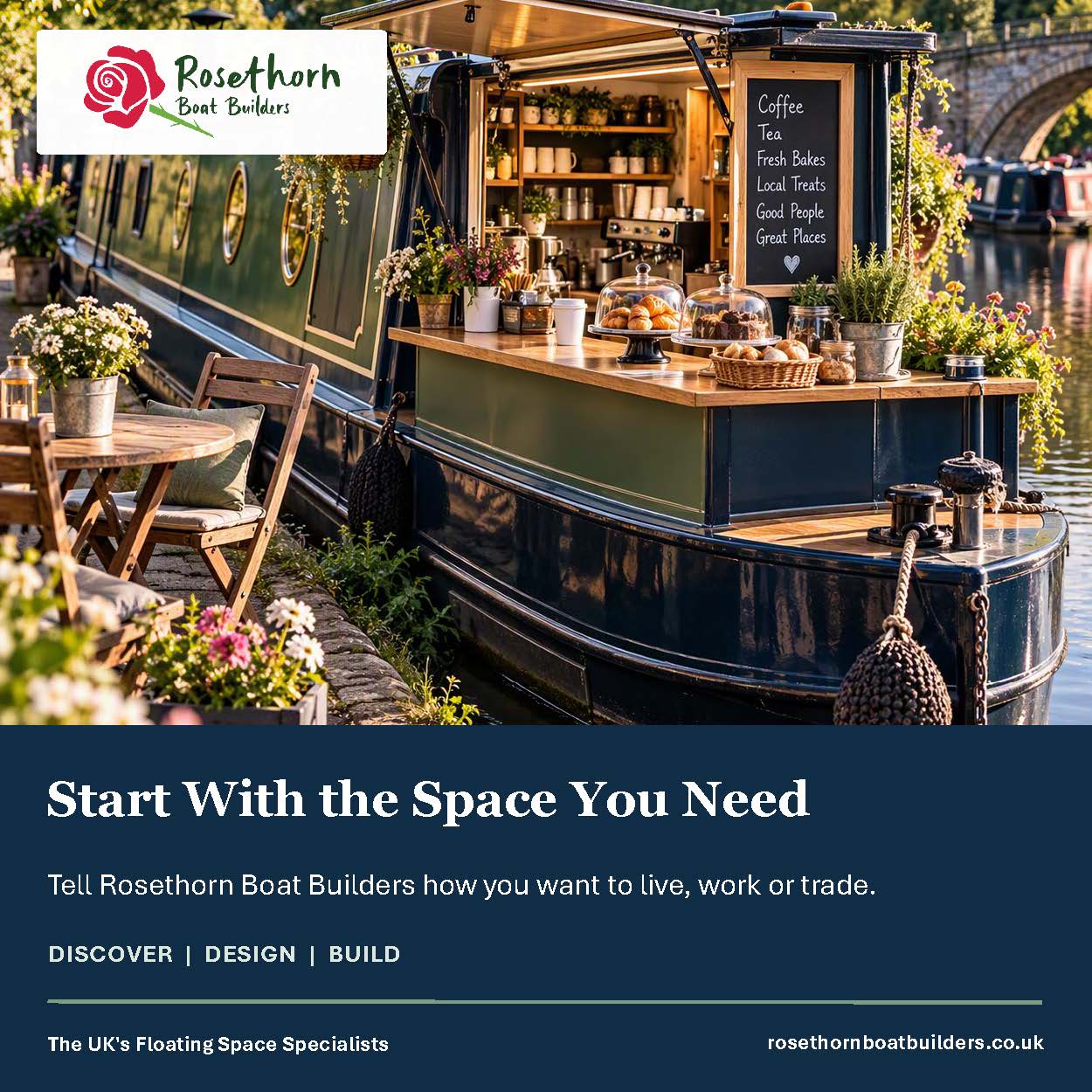
Yes. Trader barges can be developed around display, stock, preparation, serving, packing, demonstrations or appointments. The layout begins with what the business sells, how customers are served and which equipment must be accommodated.
Could a trader barge be used as a café?
A compact café or refreshment concept may be possible. Equipment, preparation, water, drainage, ventilation, food-hygiene requirements, licensing and local approvals must be considered before the specification is agreed.
Can I use a butty barge as a home office?
Yes. A floating office can provide a dedicated place for remote work, video calls, focused tasks and occasional meetings. Desk position, screen glare, storage, power, connectivity, privacy, heating and ventilation can all be considered in the design.
Can it be designed as an artist or maker studio?
Yes. Rosethorn can plan the space around the creative practice, including work surfaces, natural and task lighting, materials storage, drying space, equipment, display areas and the need to leave projects set up between sessions.
Can a floating barge provide secure storage?
Yes. Storage can be designed around the actual items that need a proper home, including bicycles, tools, stock, fishing equipment, outdoor gear, paddle accessories and seasonal belongings. Item dimensions and access requirements should be supplied during the brief.
Can it be used as a workshop?
A compact workshop can include a bench, tool wall, cabinets, task lighting, power and project storage. The suitability of particular activities depends on ventilation, noise, safety, equipment and the rules applying at the chosen location.
Can it store bicycles and e-bikes?
Yes. The design can consider cycle dimensions, rack type, door width, manoeuvring space, security and charging requirements. Any electrical charging arrangement must be specified appropriately for the site and equipment.
Can watersports equipment be stored inside?
Selected equipment such as paddles, buoyancy aids, wetsuits, pumps, helmets and inflatable boards can be accommodated. Larger kayaks or rigid boards may require external or adjacent storage depending on the dimensions and intended layout.
Can the barge be used as an extra bedroom or guest room?
A compact guest room can be developed around a clearly defined number of occupants. The design should consider sleeping arrangements, privacy, heating, ventilation, luggage, lighting, access and whether nearby washroom facilities will be used.
Does a guest-space barge need its own bathroom?
Not necessarily. The right approach depends on the intended use, duration of stays, guest expectations and the quality and proximity of facilities at the host boat or marina. A self-contained washroom uses valuable internal space and requires additional services.
Can the space be used as a utility or adaptable family room?
Yes. Potential uses include laundry, linen storage, coats and outdoor gear, a quiet family room, study area, teenage space or a flexible day room with occasional sleeping capacity.
What leisure uses are possible?
Leisure concepts can include a floating garden room, reading room, library, cinema or media room, hobby room, music-listening space, games room or private waterside retreat.
Can the barge be used throughout the year?
Year-round use may be possible where insulation, glazing, heating, ventilation and services are specified for the intended season and location. The final requirements should be agreed during design.
Will the barge have electricity and internet?
Power, lighting, charging and data requirements can be considered as part of the project. The practical solution depends on the marina or mooring infrastructure, available shore supply, mobile connectivity and the intended equipment load.
Where can a floating space be moored?
Suitability depends on the marina or waterway, berth dimensions, access, navigation requirements, landlord or marina approval, utilities and the proposed use. A prospective location should be identified early in the process.
What information should I provide with my enquiry?
Useful information includes photographs and approximate dimensions of the existing boat or site, the intended location, the main problem to solve, a list of furniture or equipment, essential features, preferred timing and any known access or utility constraints.
Do I need a finished design before contacting Rosethorn?
No. A clear description beginning with “We need more space for…” is enough to start. Rosethorn can help turn the need into a focused brief and an appropriate next step.
Where can I see completed or approved projects?
The Projects page should feature Pandora’s Box first, followed by each approved customer case study as verified project information, photographs and permissions become available.
Is there a guide to the different floating-space options?
Yes. The Floating Space Design Guide is intended to compare trader, office, studio, workshop, storage, guest and leisure concepts and help prospective customers prepare a clearer enquiry.